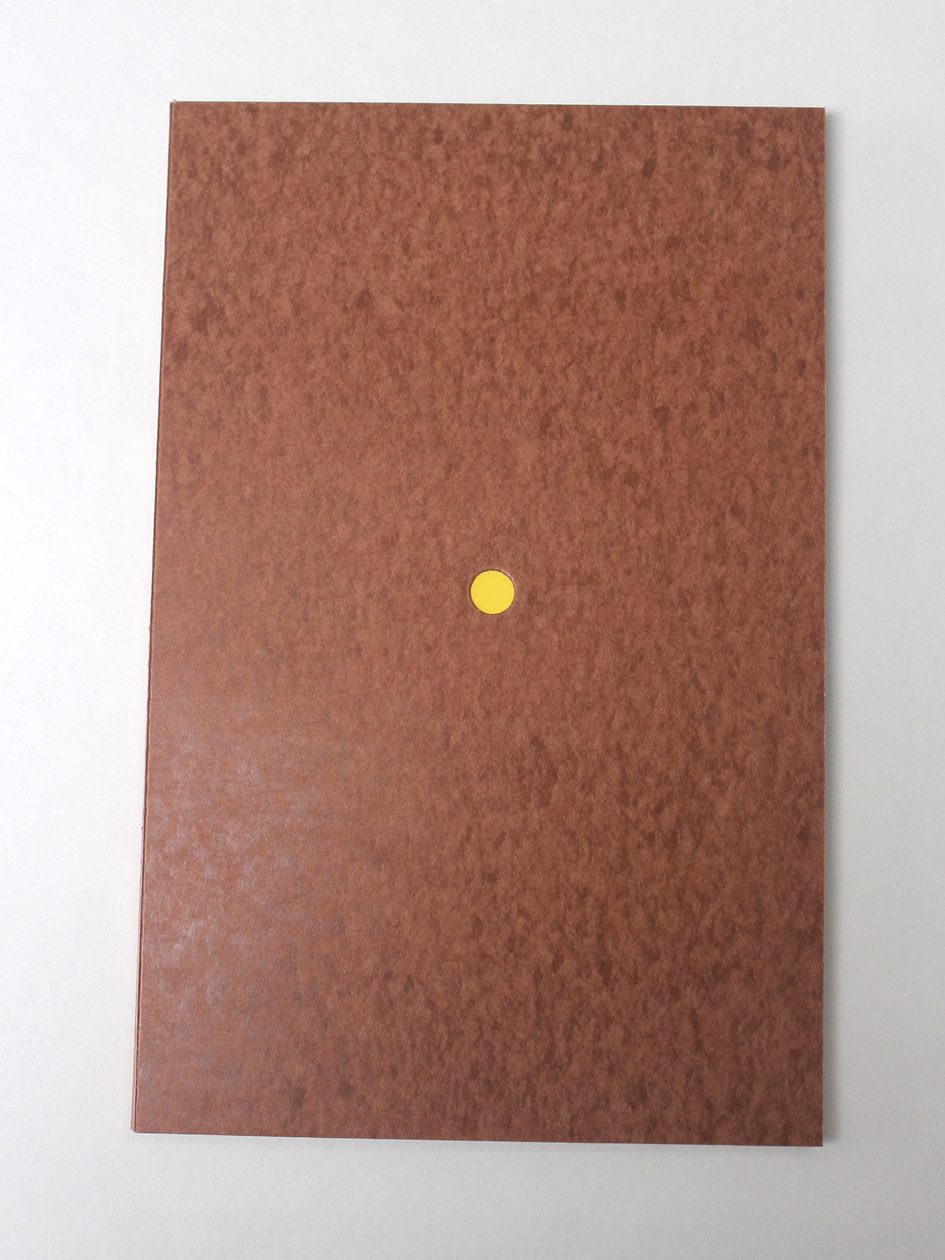
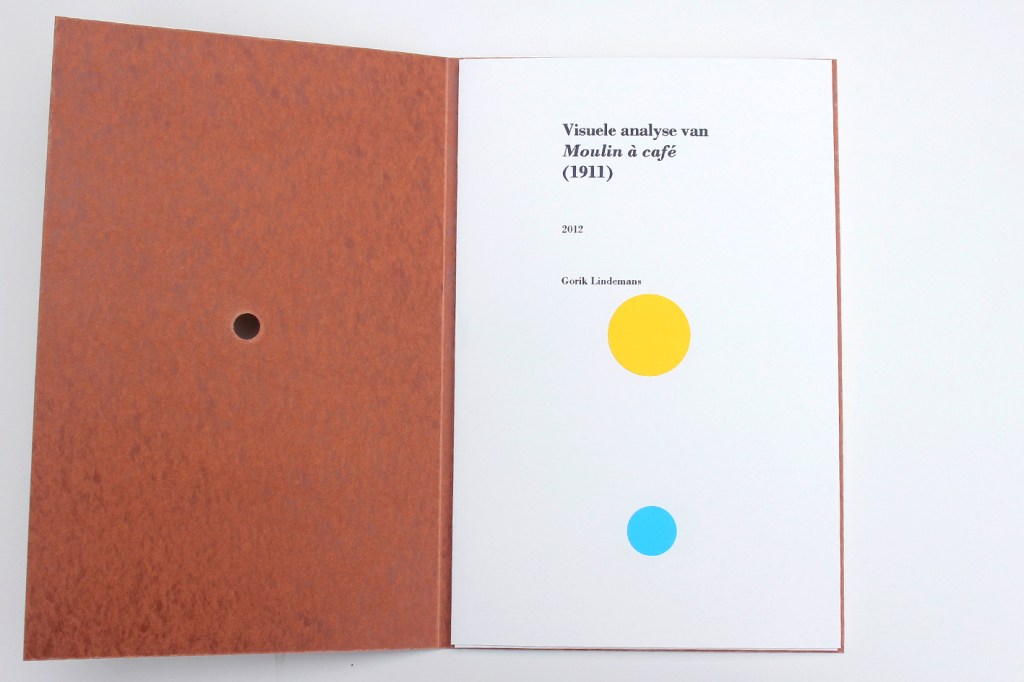
On the occasion of the publication of ‘DE DUCHAMPCODE’, a Dutch novel by Ludo Menten, I made two art editions the Visual analysis of Moulin à café (1911) I did in 2012. One as a folder and the other as a box.
2025
.
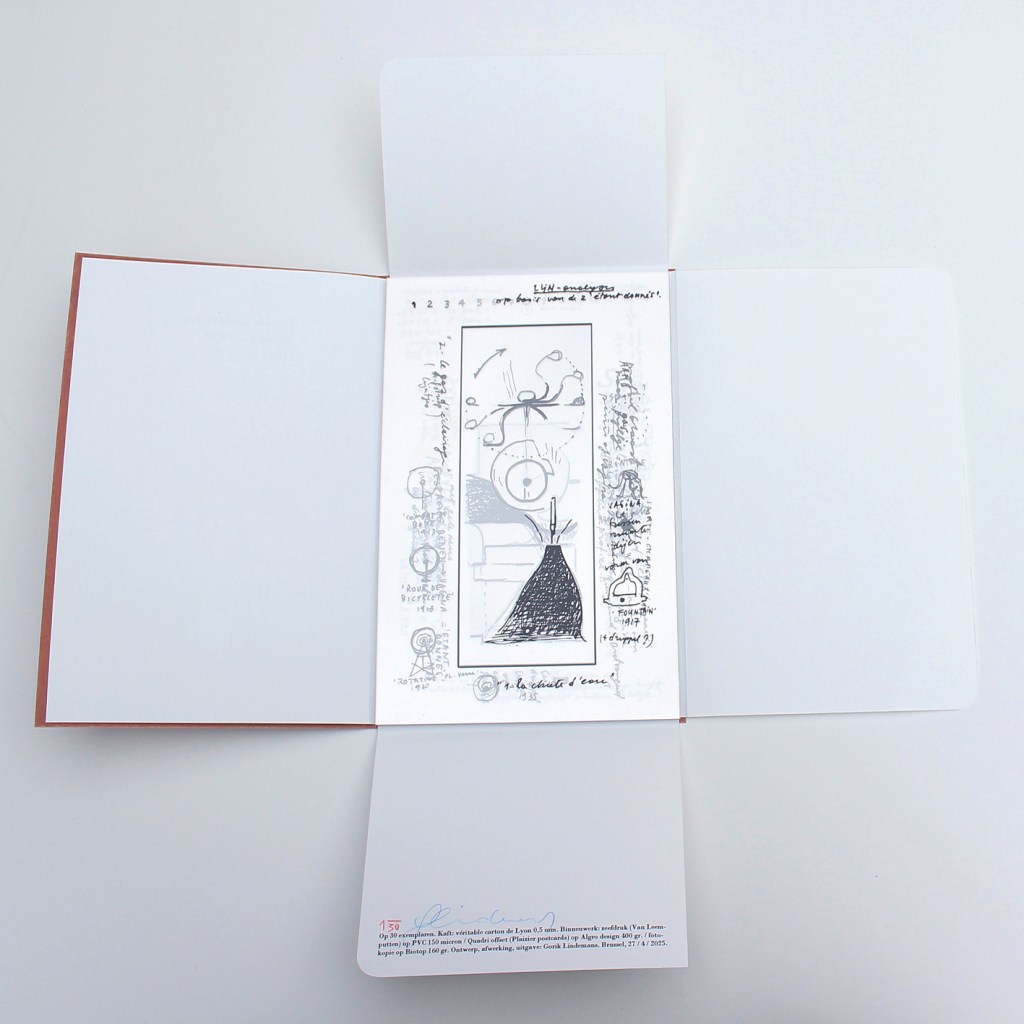
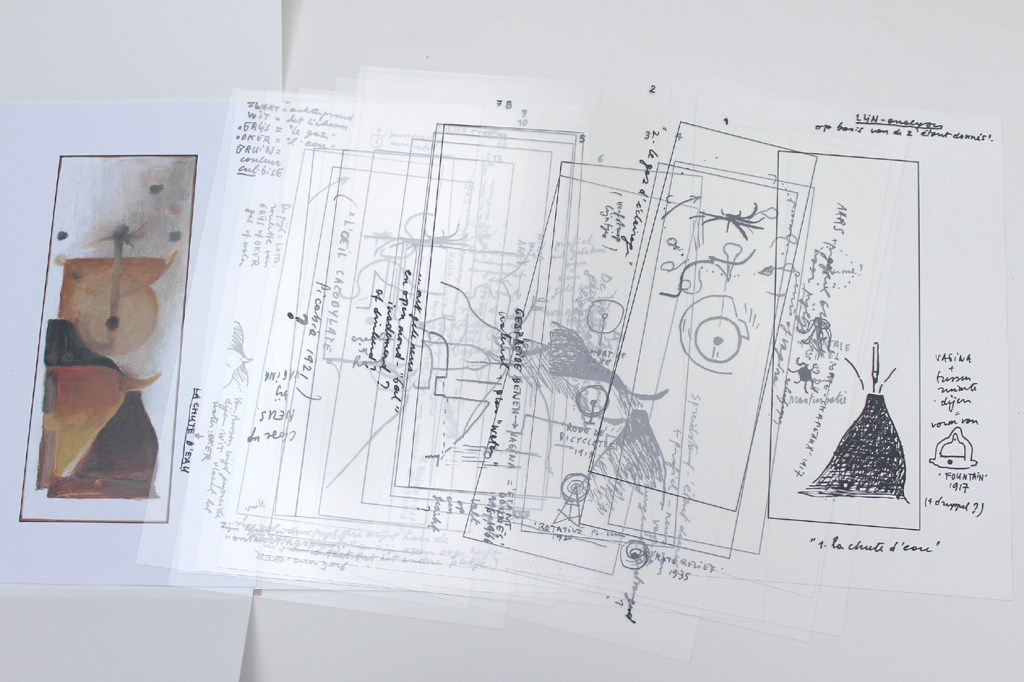
FOLDER (23,5 x 15 x 0,5 cm) 30 Numbered copies of a brown original Lyonese cardboard (0,5 mm) containing 15 line analyses separately printed in silk screen, black, on transparent PVC (150 mic) and the color analysis is printed in full color off-set on Algro design (400 gr). 250 euro.
.
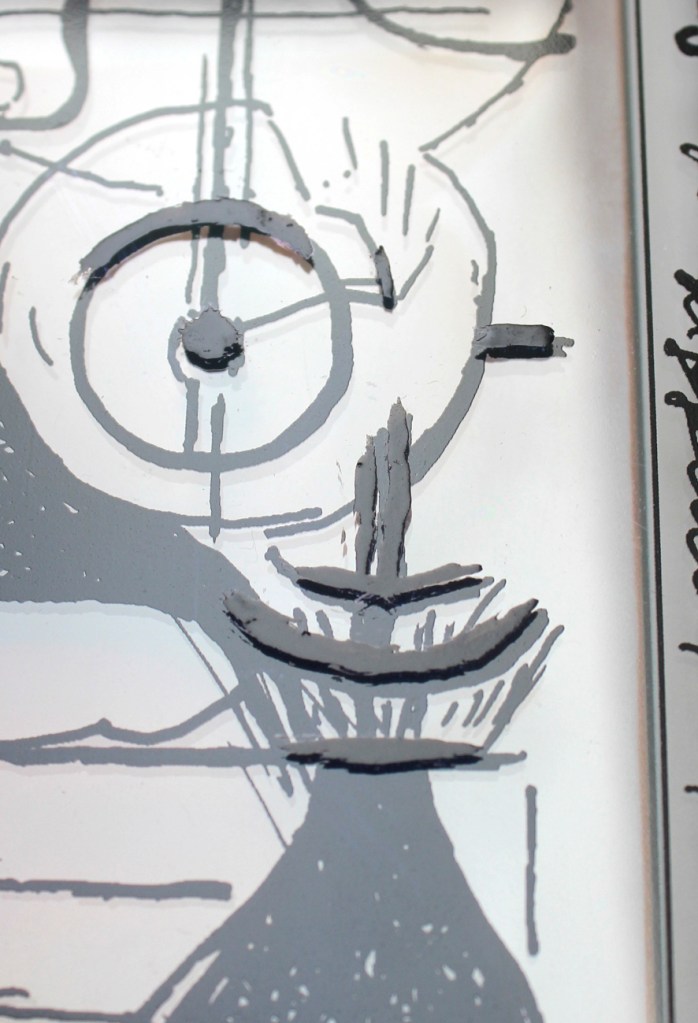
BOX (24 x 16 x 3,5 cm) 50 numbered copies of an aluminum frame, wood coated and white painted, containing a pigment color print of the color analysis on Lessebo (300 gr) and the 15 line analyses are printed all together on one transparent PVC (150 mic) in silk screen, black, and sandwiched between two UV70 anti reflective glasses, with a unique black enamel painting on its surface. 200 euro.


.
MOULIN À CAFÉ, painted by Marcel Duchamp in 1911, is a good example of the hide-and-seek game he launched posthumously with his installation piece Étant donnés: 1) la chute d’eau, 2) le gaz d’éclairage. As a result, in 1969 also Moulin à café became such a visual puzzle in which we have to find the waterfall and the luminous gas between the spread legs of a naked woman. (Quite perverse indeed, but we have to accept this. It is a given.)
I detected this game in 2011, solved many Duchamp puzzles and created a website about it in 2012 (1-2-3-DUCHAMP!). The analysis method for Moulin à café: I took its image, as published in ‘Duchamp confisqué, Marcel retrouvé’ (P. Sers, Éd. Hazan), covered it with a transparent plastic sheet and using a whiteboard marker I looked for the right combination of lines. I found 15 possibilities. ‘Maybe some are wrong, maybe I forgot some. Does it matter?’
The most significant thing I learned was: you need a lot of TIME to play one game but the results are astonishing, gorgeous and very sensorially satisfying. Just like any other art form does. So Duchamp used TIME, the fourth dimension, as a medium to make ART. And this four-dimensional art has a very different kind of admiration and appreciation, which is comparable to a game of chess: what the brain sees is more important than what the eyes only perceive.
“Just look mentally”, Marcel Duchamp suggested with a wink.
And then his ‘things’ really become genius.
.
.
AND
in february 2025
my opinion was asked about
Marcel Duchamp’s importance today
https://news.artnet.com/art-world/does-marcel-duchamp-still-matter-2613660
 Gorik Lindemans